Each year, over 150,00 tourists flood the shores of Bocas del Toro, eager to experience its vibrant culture and stunning biodiversity. They also happen to flood its public water system, as lines for wells grow longer and tap water runs the colour of coffee.
It’s this very paradox that my colleagues (Drs. Cinda Scott and Wilf Swartz) and I are interested in untangling—how is the balance between investing in a burgeoning ecotourism industry and improving insufficient public infrastructure felt at the community level?

If you’ve lived in Bocas del Toro for a while, or perhaps all your life, I’d wager this might sound familiar, and by no means is this a coincidence.
In fact, dig a little deeper and you’ll find that, across the globe, countless island communities find themselves in the same predicament—caught in a wave of development, navigating both its contributions and consequences.
Ecotourism and the Era of the ‘Blue Economy’
The blue economy is a sustainable development strategy, created in 2012 by small island developing states, to promote environmental, economic, and social sustainability. It has since become the ‘gold standard’ for ocean industry development.
The caveat is that, by definition, it must prioritize social equity and justice. In practice, this is often not the case, instead interpreted by governments as an economic-centric approach.

In island regions, where ecotourism is among the most lucrative of industries, stories of overtourism and public outcry have made national news in the past month, far too many echoing those heard in Bocas del Toro, where the pursuit of ecotourism seemingly infringes upon the well-being of communities—communities that often work in this very same industry.
The Spanish Islands: When Regulations Fail to Regulate
In one of Spain’s most popular destinations, residents of the Balearic Islands have taken to the streets (and beaches) in protest of rampant development and hordes of tourists.

Despite the government’s plans to pursue a socially, environmentally, and economically sustainable tourism industry, residents continue to face inadvertent consequences.
In Majorca, where 50% of communities do not have access to drinking water, those that do face daily restrictions. Perhaps unsurprisingly, hotels and hostels do not; instead continuing to run reservoirs dry without consequence.
Residents of Bocas del Toro similarly speculated that, during the 2023 Environmental Emergency, hotels and hostels were able to pay to have priority access to water trucks meant to provide relief to communities in Isla Colón.
Frustrations were also expressed that tourism ‘grows alone’ on the island, where restaurants, hotels, and attractions continue to ‘pop up’ without the necessary infrastructure to ensure communities do not face the collateral damage of doing so.

With climate change only intensifying dry season, plans for ecotourism development must account for the role hotels play in syphoning resources and intensifying inequities. Scaling infrastructure alongside tourism and effectively enforcing sustainability standards is paramount in rebuilding trust in the government’s ability to affect positive change through sustainable development.
Hawaii: Tourist Economies as Colonial Remnants
Ecotourism in Hawaii has recently become more burden than benefit to Hawaiian and Native Hawaiian communities. While cost-of-living skyrockets and resources stretch thin, attention has turned to the role colonialism has played in situating tourism as a dominant force in the Pacific.
As in many tropical island regions, the roots of tourism can often be traced back to the imposition and eventual decline of colonial plantation economies, where an onslaught of hotels and gift shops filled gaps in national and international markets at the end of the 20th century.

In the case of Bocas del Toro, as described by Drs. Traben Pleasant and Ana Spalding (Smithsonian Tropical Research Institute), a combination of the United Fruit Company’s decreased presence, an uptick in fraudulent ‘land grabbing’, and increased global interest following the 1991 Limon earthquake sparked a tourism ‘boom’ towards the turn of the 21st century.

The lasting impacts lie in the dominance of yet another mono-economy, where communities are priced out of restaurants, grocery stores, and real estate, and livelihoods revolve around a business model in which tourists from colonizers become the source market for the colonized.

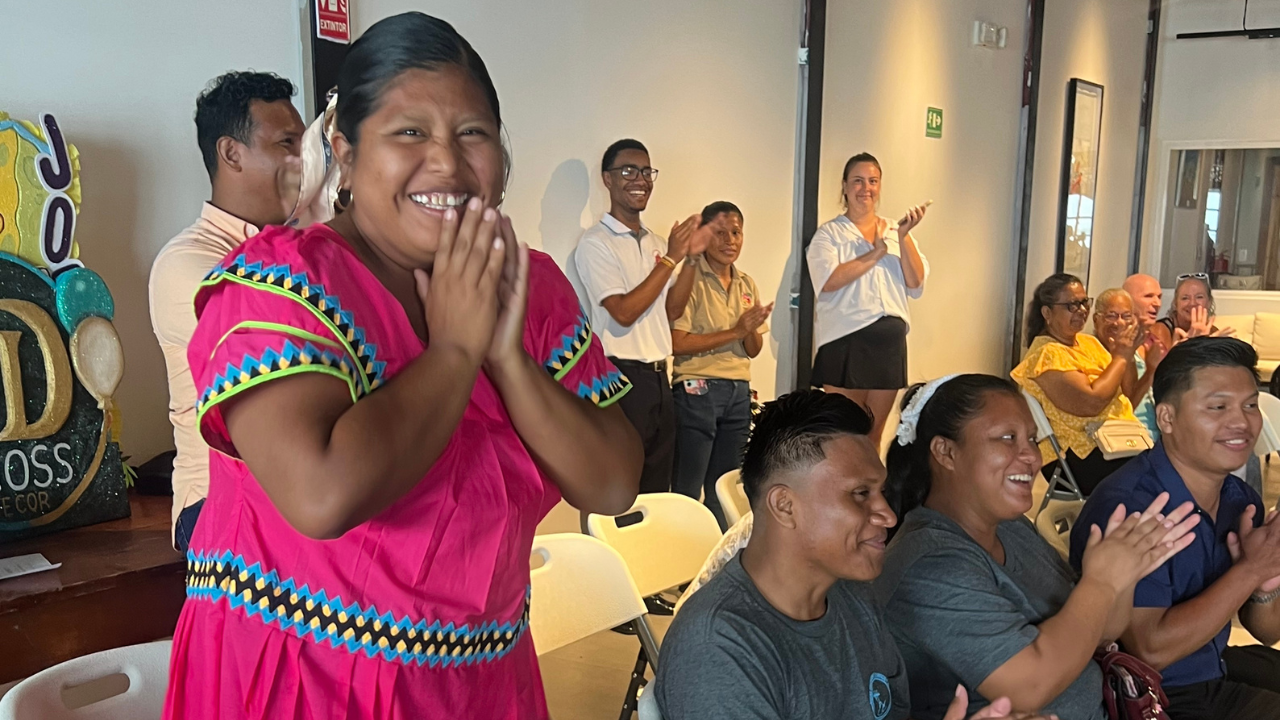
Alongside the gift shops and cafés, locals should be able to see themselves reflected in their communities. Participants recommended cultural centers for community members to gather and tourists to learn about the place they are visiting. To combat neo-colonial practices, ecotourism in Bocas del Toro must re-center culture as a priority, accounting for the role tourism may play in perpetuating harmful power disparities.
A Path Forward
It is undisputed that ecotourism remains woven into the fabric of Bocas del Toro’s economy, supporting numerous households and providing essential employment opportunities.
However, the industry can quickly impact quality of life if rampant development is not kept in check, systemic inequities are not addressed, and community needs are cast aside.
Places like Bocas del Toro, where communities are incredibly proud, generous, and resilient, deserve development strategies that are enactable, equitable, and effective, where those that most closely feel the impacts of development are in the driver’s seat.
Examples include:
- Community-led tourism development plans
- Tourist fares to deter overtourism and fund community initiatives
- Creating enforceable sustainability standards for hotels and tourism-based businesses
- Investing in projects to revitalize and protect traditional livelihoods

Editor’s Note: The views and opinions expressed in this article are solely those of the author and do not necessarily reflect the official policy or position of The Bocas Breeze or its editorial staff. If you are interested in contributing an article, contact editor@thebocasbreeze.com.