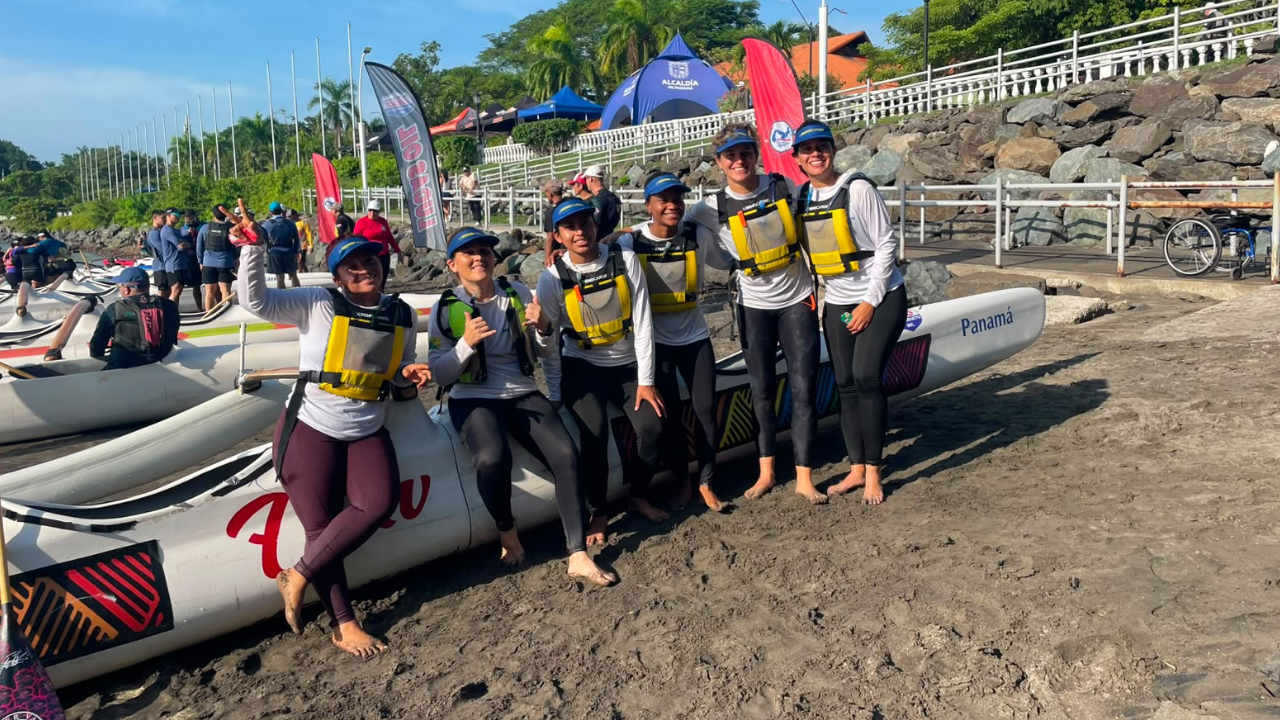
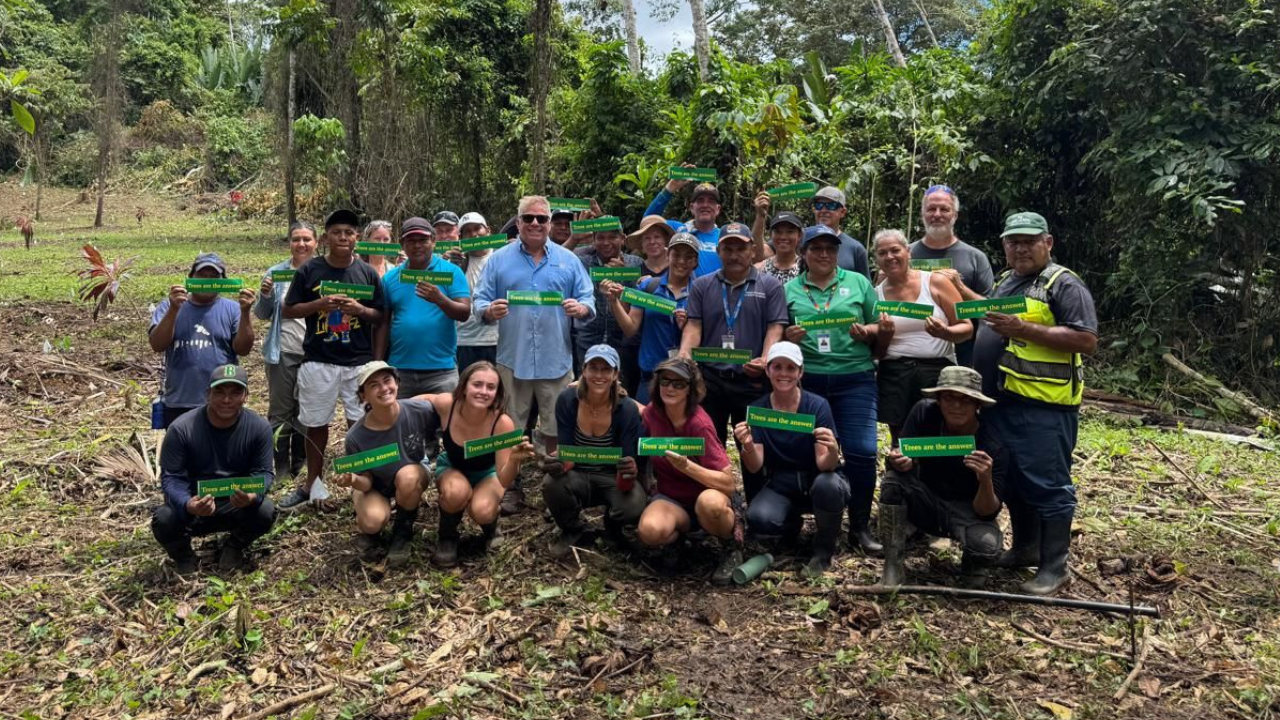
On January 17, 2025, the Bocas del Toro community demonstrated the power of unity in protecting local wildlife. Volunteers, local businesses, government agencies, and a multinational energy company joined forces to install a rope bridge in Big Creek, Isla Colón, spanning the road near Skully’s and Ciao Pizza. This bridge connects tree canopies on either side of the Bluff Beach road, providing a safe crossing for monkeys, sloths, and other arboreal creatures.
A Growing Crisis
The increased development of Isla Colón has led to an increase in wildlife fatalities due to road accidents and electrocutions. Concerned residents have spent years advocating for solutions, urging authorities and the electric company to take action.
Holly Hummel recalls that as early as 2017, The School for Field Studies staff has been working to get MiAmbiente (Ministry of Environment) to pay attention. It was during that time that staff also began to notify the electric company.
In 2022, an environmental impact study for a new road was approved, with Section 10.1.4—“Measures to Minimize the Impact on Fauna”—specifically recommending burying power lines or insulating cables to protect wildlife.
Despite this, no action was taken. In April 2024, a petition with over 3,000 signatures was delivered to the electric company advocating for change. There was no response.
Keep Bocas Wild developed a questionnaire app to help identify where cable insulation and/or wildlife bridges were most urgently needed. Users can document the species, location, if there was an injury and the cause of injury.
Community-Led Solutions
Unable to bury or insulate cables themselves, volunteers from wildlife community groups Keep Bocas Wild and Papa Gato Animal Welfare got to work building single rope canopy bridges under the direction of Costa Rica-based The Sloth Institute. Seasoned veterans in the arboreal mammal conservation game, The Sloth Institute has deployed over 2,500 meters of these “Sloth Speedways” in seven years. In April 2024, two were installed on Isla Colón—one in Big Creek and another in Bluff.
However, electrocutions continued in other areas. With road expansions and deforestation for new homes and commercial buildings reducing canopy coverage over the years, graphic images of electrocuted monkeys became a heartbreaking norm on social media and in community WhatsApp chats.


Calls to Action
As the crisis became increasingly impossible to ignore, more concerned community members stepped up. Mark Jakobs and Maike van der Linden of The Treeclimbing Company, part-time Bocas residents and full-time tree climbers, drafted a grant proposal for an extensive network of rope bridges across the archipelago. They later joined forces with Big Creek resident Wayne Turner to start the Wildlife Rope Bridges company, a commercially-driven effort to address the issue.
Following a visit from Panama’s Minister of Environment Juan Carlos Navarro in September 2024, the electric company insulated some power lines. However, many remained exposed, and the electrocutions persisted.
The December 3rd Tragedy
“We witnessed within five minutes at least five howler monkeys being electrocuted,” reported Karen Cotton as she rode past Skully’s on the morning of December 3, 2025. Dennis Messbauer and his coworker tried to catch the fallen animals. They were present for the gut-wrenching incident from start to finish, “Ten monkeys or more, five or six with babies,” he reported. “Three fell with their babies.”
“The monkeys have made their way into the forest very injured,” reported Shel Bulford of Papá Gato Animal Welfare who was on the scene. Papá Gato founder Russell Easby-Smith says “We’ve had a lot of howler monkeys come to us electrocuted and we’ve never had a single one that has ever survived.”
“A lot of times when they are electrocuted the current goes right through, so any tissue or organs along the way get cooked. They may survive for a little while but will die a painful death,” explains Bulford.
Electrocutions often cause internal burns, leading to slow, agonizing deaths. While many incidents have been documented in recent years and shared around to raise awareness, there are an untold amount of animals that are injured only to disappear into the jungle, suffering out of public view, as their troop loses another member and the population wanes.
The Bocas Breeze report on the December 3rd incident caught the attention of Minister Navarro, who responded on Instagram: “Terrible. Through our regional agency in Bocas, we are making every effort to address this situation and protect our wildlife.”

Turning Tragedy into Action
The December 3rd electrocutions catalyzed renewed efforts to install another rope bridge in a critical area. The next day, Puentes Verdes: Uniendo Naturaleza y Vida (Green Bridges: Uniting Nature and Life) was announced—a fundraiser organized by Katherine Michelle Croston Gardellin and held on December 11, 2024, at Bésame Bocas. The event, featuring a live DJ and artisan bazaar, raised $600 for bridge installation.
Keep Bocas Wild interfaced with local authorities and Naturgy to secure materials. The electric company supplied the blue 19mm Superior Corcel rope, coordinated with support from Manuel Sanjur of the Bocas del Toro governor’s office. With the materials contributed by the electric company, the $600 from the December 11th fundraiser was utilized to cover labor costs in the form of the fee charged by professional tree climbers to install the bridge.

January 17: A Milestone Installation
On January 17, 2025, the new bridge near Skully’s became a reality. Due to heavy traffic in the area, the installation required coordination between the Keep Bocas Wild volunteers, the new Wildlife Rope Bridges company, police, Naturgy, Ministry of Environment officials, and ground spotters managing traffic. Naturgy provided a bucket truck to assist with the installation.


More Bridges Needed
As of March 25, 2025, five official Sloth Speedway rope bridges have been installed on Isla Colón:
- Three in Big Creek (between Playa Tortuga and Skully’s)
- Two in Bluff
- Additional installations by property owners
However, at the time of this publication, there are zero wildlife bridges on the road to Boca del Drago, where the recent road renovation resulted in significant deforestation that has fragmented the jungle. Many of us fondly remember the “bamboo forest” and all the shady areas along the road where the canopy used to touch, allowing for natural wildlife crossings. Now the road is wider, there are no longer any points of canopy coverage and there has yet to be a wildlife bridge installed. Keep Bocas Wild has identified 6–10 priority locations on this road and another 6–10 along the Bluff Road where crossings are urgently needed.
How to Help
If this cause resonates with you, get involved!
- Keep Bocas Wild is leading non-profit efforts to install more bridges.
- To support the initiative, contact Steve Jacoby of Keep Bocas Wild +507 6889-5997 (WhatsApp only) or sjacoby5@gmail.com.
- Donations for materials and labor are essential to continue the work.
Beyond Bridges: The Long-Term Solution
While canopy bridges help keep animals off the ground, they do not prevent electrocutions. Sam Trull, Executive Director of The Sloth Institute, explains:
“The purpose of our ‘Sloth Speedways’ (single rope wildlife bridges) is to keep fragmented habitat connected AWAY from roads so that animals like sloths and monkeys are less likely to make it to roads to begin with and to prevent them from traveling on the ground.
Once arboreal mammals have made it to roads, wildlife bridges are great at helping to keep them off the ground away from dogs and cars, but unfortunately they aren’t very effective at preventing electrocutions because monkeys and sloths will continue to use electric wires even with ropes in place.
Our research shows that the only way to fully prevent electrocutions is by placing wires underground. The second best option is to insulate the electric wires and transformers as this prevents most electrocutions or when they happen they are much less severe.”
The April 2024 online petition is still active, urging authorities and the electric company to bury or continue insulating the rest of the exposed electric cables. It can still be shared and supported with more signatures. The community of Bocas del Toro remains committed to advocating for these critical safety measures.
In the meantime, every new bridge brings hope for Bocas del Toro’s wildlife.